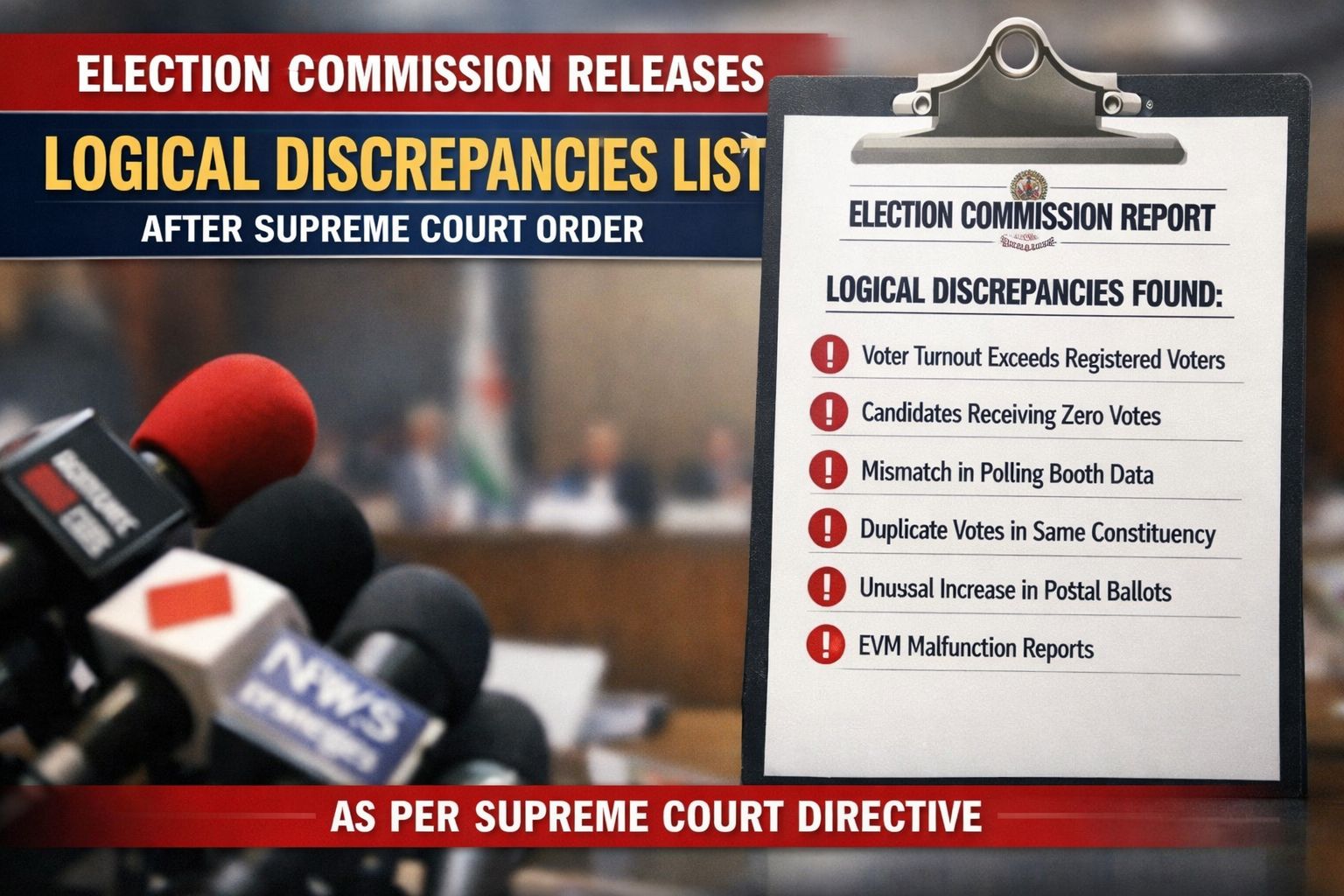
The Day I Found My Name Listed Twice
A few years ago, while checking the electoral roll online, I found a shock: my name appeared in two different constituencies—my current address and my old college town. I was one accidental entry in a sea of millions. That personal experience made the recent Supreme Court order on “logical discrepancies” feel deeply significant. This isn’t just bureaucratic data cleaning; it’s about protecting the weight of every single vote. Let’s decode what’s happening.
Table of Contents
-
Headline Explained: The Supreme Court Order & The ECI’s List
-
What Are “Logical Discrepancies” in Plain English? (With Examples)
-
Why Does This List Matter? The Integrity of the Electoral Roll
-
Breakdown: What’s Inside the Released List?
-
Step-by-Step: How to Check if YOU Are Affected
-
The Bigger Picture: Transparency vs. Privacy Concerns
-
FAQs: Your Practical Questions, Answered
-
Your Role as a Voter: Actionable Steps to Take
1. Headline Explained: The Supreme Court Order & The ECI’s List
Here’s the sequence of events that led to this news:
-
The Petition: Activists filed a case seeking greater transparency in the voter list cleanup process.
-
The Supreme Court Order (Late 2023): The SC directed the Election Commission of India (ECI) to publicly share data on “logical discrepancies” found during its routine revision of electoral rolls.
-
The ECI’s Compliance (Jan 2024): Following the order, the ECI has now published a state-wise and constituency-wise list of these discrepancies on its website.
In essence: A court has asked for more public accountability in how voter lists are purified, and the election body has complied by releasing the data.
2. What Are “Logical Discrepancies” in Plain English?
Think of it as the election software finding “red flags” or illogical entries in the voter database. These are not confirmed fraud, but errors that need human verification.
Common Examples:
-
Multiple Entries: The same person (matching photo, DOB, relative details) registered in more than one constituency.
-
Demographic Impossibilities: Voters listed as over 100 years old without being marked as “centenarian,” or an improbably high number of voters at a single small address.
-
Data Inconsistencies: Duplicate photos with different names, or mismatched demographic data.
-
Deceased Voters: Names not yet removed from the roll after the individual’s death.
(I would create a simple infographic here titled “Common Logical Discrepancies” with icons for each type.)
3. Why Does This List Matter? The Integrity of the Electoral Roll
This release is a major step for electoral transparency. Here’s why it’s crucial:
-
Prevents Electoral Fraud: Cleaning the roll minimizes the risk of impersonation or bogus voting.
-
Strengthens Public Trust: When citizens see the ECI actively identifying and fixing errors, confidence in the electoral process increases.
-
Upholds “One Person, One Vote”: It ensures the fundamental principle of democracy by eliminating duplicate entries.
-
Promotes Accountability: Political parties and citizens can now scrutinize the data and help in the purification process.
4. Breakdown: What’s Inside the Released List?
The data is typically released in a spreadsheet format. Here’s what the columns mean:
| Column Header | What It Signifies | Why It’s Important |
|---|---|---|
| State/UT | The state or union territory. | Shows geographical focus of discrepancies. |
| Parliamentary Constituency | The specific Lok Sabha constituency. | Pinpoints areas needing scrutiny. |
| Assembly Constituency | The specific Vidhan Sabha segment. | Allows for micro-level analysis. |
| Part Number & Serial | The exact location in the electoral roll. | Enables precise identification of the entry. |
| Type of Discrepancy | e.g., “Duplicate Photo,” “Demographic Issue.” | Explains why the entry was flagged. |
| Number of Entries | The count of such discrepancies in that segment. | Indicates the scale of the issue. |
(Source: [Link to ECI Website/Portal])
5. Step-by-Step: How to Check if YOU Are Affected
Don’t panic. The list is for public information and corrective action. Follow these steps:
-
Visit the Official Portal: Go to the ECI’s Electoral Search website (
electoralsearch.eci.gov.in). -
Search for Your Details: Enter your name, age, and state/constituency.
-
Verify Your Entry: Check that your details (photo, address, family members) are correct and that you appear only once.
-
Check the Discrepancy List (Optional): You can download the ECI’s published PDF/Excel file for your state and do a
Ctrl+Fsearch for your locality or part number.
If you find an error in YOUR entry:
-
Use Form 8 (correction), Form 6 (new registration), or Form 7 (deletion) on the Voter Helpline App or your local Electoral Registration Officer (ERO).
6. The Bigger Picture: Transparency vs. Privacy Concerns
This move has sparked a vital debate:
-
The Transparency Argument: Sunlight is the best disinfectant. Public data allows for crowd-sourced verification and builds trust.
-
The Privacy Concern: Releasing detailed lists could potentially be misused for profiling. The ECI must ensure personal data (like exact addresses) is anonymized.
The Balance: The current list seems to strike a balance by showing constituency-level aggregates and types of errors without exposing individual voter identities unnecessarily.
7. FAQs: Your Practical Questions, Answered
Q1. Does this mean there is large-scale voter fraud in India?
A. No. This is a routine cleanup process that happens before every election. Finding discrepancies is evidence the system is working to identify errors. Most are clerical, not malicious.
Q2. Will these names be deleted automatically?
A. No. The list is for verification. Booth Level Officers (BLOs) will now physically verify each flagged entry. Only after due process and notice will any name be deleted.
Q3. As a voter, what should I do?
A. First, verify your own details. Second, if you know of any errors in your locality (e.g., a deceased neighbour still on the list), you can file Form 7.
Q4. Where can I find the official list?
A. On the Election Commission of India’s website (eci.gov.in) under “Electoral Rolls” or “Latest Updates.”
Read more
Election Commission Releases Logical Discrepancies List: What It Means for Your Vote & Democracy
Why Himachal Pradesh Statehood Day is Celebrated on January 25: The Complete Historical Journey
Conclusion: An Empowered Electorate is the Best Safeguard
The release of the Logical Discrepancies List is more than a compliance report; it’s an invitation to citizen participation. Democracy is not a spectator sport. The strength of our electoral roll depends on the vigilance of millions of voters, just like you.
This transparency empowers you to move from being a passive voter to an active stakeholder in the integrity of our elections.
Have you ever found an error in the voter list? Or do you have questions about how the verification process works? Share your experiences or queries in the comments below—let’s demystify the process together.
Next Read: To understand the complete journey of your vote, read: [“From Voter ID to EVM: A Complete Guide to How Your Vote is Cast and Counted in India.”]

Balavant | B.Sc. Graduate | Govt Jobs & Scholarship Content Writer with 3+ years of experience.
📧 Email: balvantkhelge8@gmail.com